Marine Science News

Sea foam reveals a lot about the health of a beach’s ecosystem. Here’s how to spot polluted surf

Gumersindo Feijoo
Gumersindo Feijoo Costa, Universidade de Santiago de Compostela

A simple stroll along a beach on a windy day can be mesmerising. It’s easy to spend hours watching waves crash and sea foam fizz across the sand, but this beautiful yet fleeting phenomenon can also give us clues about the health of the ocean.

Sea foam is produced by the turbulence caused by the force of the waves and the wind which, when combined with organic matter (mainly plankton), forms a mixture of water and air bubbles that clump together and rise to the surface as foam.

Schematic structure of sea foam. Gumersindo Feijoo, CC BY

This colloidal dispersion – the name for non-soluble particles suspended in a gas or liquid – occurs because organic matter reduces surface tension, a physicochemical property whereby liquids behave as if they were covered by a thin elastic membrane.

In order to mix substances that cannot be dissolved – such as water and air or water and oil – surface tension must be reduced by surfactants (chemical compounds with both hydrophilic and hydrophobic parts) which act as a bridge. This creates an interface between the two components, allowing liquids to mix with gas and solids, or with other liquids, such as water and organic matter.

This property is essential for, for example, ensuring the bioavailability of certain organic compounds in agrochemicals, for biodegrading oil spills, and for remediating soil contaminated with fuel. On a more mundane level, it’s also the mechanism that helps us wash stubborn grease stains out of clothes.

What sea foam tells us

Sunlight is essential for life on Earth, and consists of three main components: visible light, infrared (heat) and ultraviolet (UV) radiation. The main characteristics of light are its wavelength and frequency.

Basic characteristics of sunlight. Wavelength (λ) is measured in nanometres (nm) and frequency (f) in hertz (Hz). The symbol ‘c’ in the equation represents the speed of light. Gumersindo Feijoo, CC BY

Visible light (with a wavelength of approximately 400 to 700 nanometres) is a small portion of the spectrum that the human eye can perceive. When light strikes an object, its surface absorbs certain wavelengths and reflects others. Only the reflected wavelengths can be seen by the eye, meaning only those colours are perceived by the brain.

The colour of the sea changes due to the selective absorption of light by the water, which is influenced by its chemical composition, marine life, and weather conditions. Water is, of course, transparent, but when there is a large volume of it, light absorption across the spectrum increases, resulting in a blue hue.

White sea foam that disappears quickly is a sign of a healthy ecosystem. Gumersindo Feijoo, CC BY-SA

In sea foam, air bubbles scatter and reflect light in all directions without absorbing it, which explains why it appears white to the eye. It is, importantly, distinct from the colour “seafoam” in art or fashion, which is usually a muted blend of green and blue.

When it comes to sea health, white foam that disappears almost instantly is a clear sign of a healthy ecosystem. Conversely, dense foam that sticks around, a dark (typically brownish) colour, or an unpleasant odour are symptoms of either chemical pollution (from agricultural fertilisers, or industrial or urban runoff) or biological pollution.

One example of biological pollution is the recurring episodes of foam formation on the beaches of South Australia. During February and March in 2025 and 2026 (summer in the southern hemisphere), algal blooms covered swaths of the coast in foam, with terrible consequences for the health of animals and people alike.

A surfer wades through sea foam caused by algal bloom on Christies Beach, Australia, on October 22, 2025. Troy Rigney, CC BY-ND

If we look after the planet and avoid polluting it, it will continue to provide us with healthy environments and scenes of extraordinary beauty. But failure to do so won’t just harm nature and, by extension, our own health – it will also lead to the disappearance of things like the healthy, effervescent sea foam that we know, love and enjoy.

This article is republished from The Conversation under a Creative Commons license. Read the original article.

May 6 2026

When a beach walk feels like grief: disasters like SA’s algal bloom cut us off from nature when we need it most

John White Photos/Getty

In March 2025, surfers and swimmers were the first to notice the harmful algal bloom taking hold in South Australian waters. People catching waves at a popular break on the Fleurieu Peninsula later reported feeling sick with flu-like symptoms. Over the five months since, an “unprecedented” environmental disaster has unfolded, devastating marine ecosystems and the South Australian economy. It has also fundamentally changed the way people connect to the ocean.

This particular bloom caused by Karenia mikimotoi – is deadly to various marine species, while in humans it can cause milder illness and irritation. But the impact on mental health and wellbeing is profound.

When people can no longer use “blue spaces” such as the ocean to surf, swim, fish and walk on the beach, they are losing activities that calm and relax them – exactly when they’re most sick with worry about their beloved coastline.

A perfect storm

South Australia’s algal bloom is the result of a perfect storm – a marine heatwave, nutrient rich water from previous flooding, and a rare cold-water upwelling.

Current public health advice tells surfers and swimmers to stay out of water if it looks “discoloured, foamy, or where there’s dead marine life”. Given that dead marine life is washing up across many South Australian beaches, this means it’s hard to find any place to surf or swim.

Recreational fishers are advised that catching fish (and other marine species) is safe if it’s cleaned thoroughly before eating. But many are not throwing their lines in due to concerns about depleting the surviving marine life.

Blue spaces and health

Activities such as swimming, surfing and fishing are not only enjoyable, they have a range of health benefits.

There is mounting empirical evidence about the range of benefits from spending time in “green spaces”, such as parks and bushland.

In 2020, a review of evidence about “blue spaces” – meaning oceans, rivers and lakes – found similar benefits.

For example, swimming outdoors in nature – sometimes known as “wild swimming” – can reduce fatigue and improve mental health. There is also early evidence that it can promote immune functioning.

Surfing also has physical and mental health benefits, and increases community connections. One study of recreational fishers found three in four (75.5%) fish for stress relief.

But these are benefits people in areas affected by the algal bloom are no longer getting.

Grief and anxiety

The algal bloom means people can’t access blue spaces and their health benefits. In fact, the devastation can mean engaging with blue spaces actually makes people’s mental health worse, through worry and grief about the environment.

Eco-anxiety describes the extreme fear, worry, sadness or a generally heightened emotional state we may feel in response to changes in the climate or environment. When people experience grief and other negative emotions about changes to a place they love, this is sometimes called “solastalgia”.

Both eco-anxiety and solastalgia can be responses to global changes, such as warming temperatures and rising sea levels. But they are felt most acutely among those affected directly by a disaster.

Research after Australia’s 2019–20 bushfires found high levels of eco-anxiety and solastalgia among those who survived, with the environment becoming a source of pain and grief.

Given this harmful algal bloom is being referred to as an, it is unsurprising we are seeing people describe similar concern, worry, sadness and loss.

I am part of a team from the University of South Australia currently researching this impact, by surveying people who live near and use the beach to better understand their experience.

Are there any silver linings?

Grief about the destruction of a place we love is the sign of how much we care about it – and this can be galvanising.

Research shows eco-anxiety can be a form of practical anxiety. This means unlike other forms of worry it is more likely to also drive behaviour change.

We are already seeing this in South Australia. Over 12,000 recordings on iNaturalist – a website where members of the community upload photos and help identify species – provide shocking visual evidence of the loss and devastation. Distressed beachgoers who are participating in citizen science programs such as these help keep the spotlight on the disaster, as well as rescuing stranded sea animals and protesting for action from government and industry. Amid the grief, it’s important to try and still maintain our connection to our environment. When we can’t spend time in our usual natural spots, we can still benefit from connecting with nature beyond blue spaces – even if it’s simply visiting a park or planting something new.The Conversation

Brianna Le Busque, Lecturer in Environmental Science, University of South Australia

This article is republished from The Conversation under a Creative Commons license. Read the original article.

August 11 2025


As oceans warm, tropical fish are moving south. New friendships may be helping them survive

When you think about climate change in our oceans, you may picture coral bleaching, melting sea ice, or extreme weather events. But beneath the ocean’s surface, another quiet shift is underway. Australia’s tropical fish are heading south into cooler waters.

These fish are not just visiting. They are settling into the milder “temperate” reefs that used to be too cold for them. As they do, they encounter new environments, new challenges and new neighbours.

In our new research we studied the behaviour of these new migrants. We found some tropical fish are not just surviving in their new homes, they’re thriving. And, surprisingly, much of that success comes down to who they’re hanging out with.

A slow-motion invasion

Tropical fish travel poleward via ocean currents. On Australia’s east coast, the fish typically hitch a ride on the strengthening East Australian Current as it pushes warm water and the tropical species further south.

Some species are showing up hundreds of kilometres beyond their usual home range. Many tropical fish arrive on temperate reefs during summer, and used to die over winter when the water grew colder. Now, as winter water temperatures increase, some tropical fish survive year-round in temperate reefs.

But life at the edge of your range is risky. These fish encounter colder water temperatures, unfamiliar predators and a reef full of competitors. So, how do they cope?

A diver swims underwater holding a special notebook while looking for fish on a temperate reef of kelp and seaweed in southeastern Australia.
As waters warm, temperate reefs of kelp and seaweed are becoming home to tropical fish as they venture southward. Angus Mitchell

Risky business: but some fish can adapt

We studied five tropical fish species and two temperate species across a 2,000km stretch of Australia’s east coast, from the tropics to the cold temperate south. We observed how these fish fed, sheltered and reacted to threats, using underwater video cameras. Analysis of the footage revealed tropical fish behaved differently in the colder waters. They spent more time hiding and less time feeding. They were also more wary of predators, displaying a cognitive shift in “lateralisation” — a preference to consistently turn left or right, which can help fish make faster escape decisions when threatened. Such risk-averse behaviour is likely to help fish stay alive in unfamiliar reefs by avoiding predators. But it also reduces food intake and growth, unless these fish find new friends.

New school mates, better outcomes

Previous research has shown when tropical fish gather or “shoal” with temperate fish, they grow bigger and survive longer into winter than fish in tropical-only shoals. We wanted to understand the mechanism for this phenomenon. Could tropical fish be learning from temperate shoal mates? And how might their behaviour change when shoaling with temperate fishes?

Using underwater videos, we found three tropical damselfish species spent more time feeding and less time sheltering when they formed mixed shoals with temperate fish. They also appeared bolder and were more successful at finding food. We think these mixed shoals offer key advantages: safety in numbers, more eyes watching for predators, and perhaps most importantly, social learning. By shoaling with local temperate species such as the Australian Mado, tropical fish may learn where and when it’s safe to feed, and how to behave in these foreign temperate ecosystems. This kind of behavioural “plasticity” is a powerful tool in a changing climate. Fish that can adjust their behaviours in ways that boost their fitness are more likely to survive as climatic conditions rapidly shift in our oceans.

Underwater still image showing a mixed group of fish, both tropical and temperate species, living together on a rocky reef
Tropical and temperate fish species form a mixed-species group or shoal at Little Manly in southeastern Australia. Angus Mitchell

Not all fish benefit

These interactions were not always beneficial. Two herbivorous tropical fish species, the convict tang and brown tang, did not show the same benefits, likely because their specialised diets made it harder to learn from omnivorous temperate species.

And for the temperate fish, the presence of tropical fish in shoals were often problematic. At the northern, warmer edge of their range, temperate fish fled more often and fed less when tropical fish were present. That’s worrying, because warming alone is already pushing many temperate species toward their biological limits. Adding new competitors might push them over the edge.

Underwater image from a video shows a shy type of tropical fish, convict tangs, clustered together on a temperate oyster reef.
Herbivorous convict tangs (Acanthurus triostegus) shoal tightly near shelter on a temperate oyster reef. At the edge of their range, these tropical fish adopt more cautious behaviours, seeking refuge and foraging less. Angus Mitchell

A changing reef community

All this comes amid dire news of the Earth’s oceans. Research published today shows 2023 set new records for the duration, extent and intensity of marine heatwaves. Fish migration to temperate reefs is a glimpse of the future: even warmer waters, shifting species ranges and new species interactions.

Our results suggest these new species interactions and relationships, particularly mixed-species shoaling, can help tropical fish survive longer in temperate ecosystems. But they may also disrupt existing ecosystems and place extra stress on local temperate species. In this way, climate-driven range shifts are more than just a temperature driven story. They’re stories about behaviour, relationships, and resilience.

Understanding how fish respond to their new neighbours and how those responses shape who stays and who goes, will be key to managing reefs in a rapidly warming ocean. The Conversation

Angus Mitchell, Postdoctoral Researcher in Marine Ecology, University of Adelaide; Chloe Hayes, Postdoctoral Researcher in Marine Ecology, University of Adelaide, and Ivan Nagelkerken, Professor, Marine Biology, University of Adelaide

This article is republished from The Conversation under a Creative Commons license. Read the original article.

July 25 2025

Jaws at 50: how a single movie changed our perception of white sharks forever

Shane Myers Photography/Shutterstock
John Long, Flinders University and Heather L. Robinson, Flinders University

It’s been 50 years since Steven Spielberg’s movie Jaws first cast a terrifying shadow across our screens.

At a low point during production, Spielberg worried he’d only ever be known for big fish story”. The film, however, did not tank.

Jaws broke box office records and became the highest-grossing movie at the time, only surpassed by the first Star Wars released two years later in 1977.

A combination of mass advertising, familiar “hero” tropes and old-school showmanship launched Jaws as the first modern blockbuster.

Hollywood, and our relationship to oceans and the sharks within them, would never be the same.

Photo of a dog-eared paperback copy of Jaws book next to a poster of the movie.
The novel Jaws was based on was a bestseller in its own right. Snap Shot/Shutterstock

An unrealistic monster

In Peter Benchley’s 1974 novel that Jaws is based on, the shark is 6 metres long. For added screen excitement, in the movie it grew to a whopping 7.6 metres.

However, that’s unrealistically large.

The average size of a mature great white Carcharodon carcharias (also known as the white shark) is between 4.6 and 4.9 metres for female sharks and up to 4 metres for male sharks.

The largest recorded living specimens peak at about 6 metres, with one monster specimen caught in Cuba in 1945 reaching 6.4 metres.

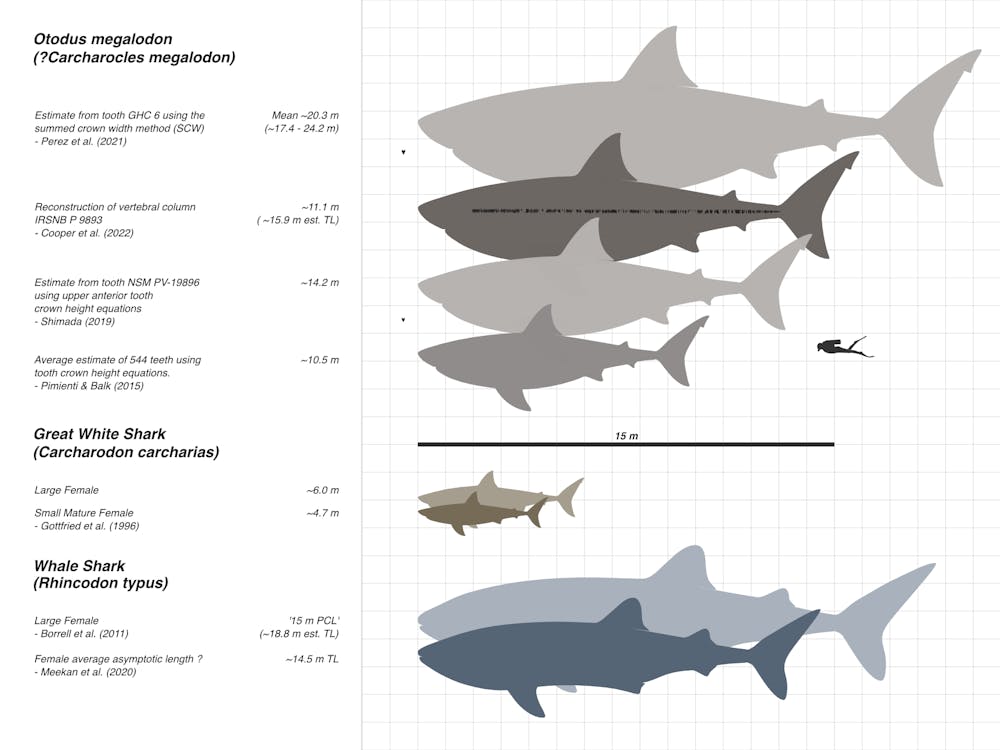
Earth’s oceans have seen bigger predatory sharks in the past. The biggest one of all time was the megalodon (Otodus megalodon) which lived from 23 to 3 million years ago, and may have been up to 24 metres in length. However, it looked nothing like the modern white shark.

We don’t know precisely how big the megalodon was, but certainly larger than the great white shark. Steveoc 86/Wikimedia Commons, CC BY-SA

They’re not even directly related – another thing scientists learned quite recently.

Who was the megalodon, then?

White sharks first evolved between 6 and 4 million years ago in the shadows of the megalodon. A recent study showed the megalodon’s large serrated teeth show signs of it being a supreme opportunistic super-predator.

That means it ate just about anything, but especially liked whales and marine mammals.

But white sharks are not directly related to the megalodon, whose lineage began with a shark called Cretalamna during the age of dinosaurs about 100 million years ago.

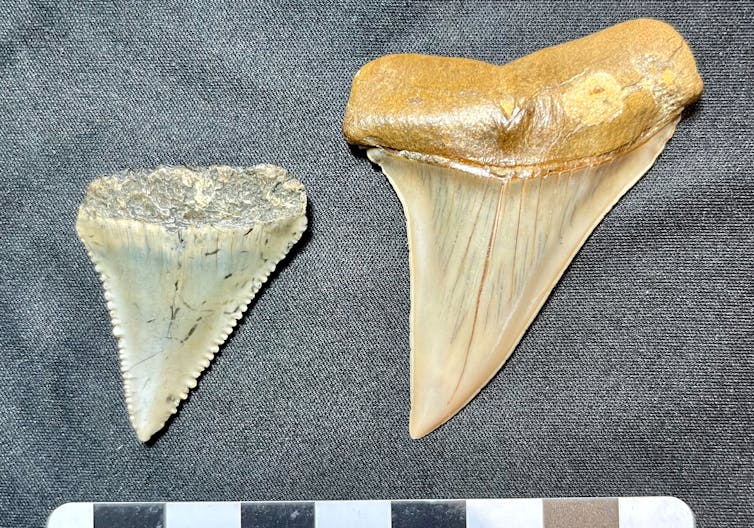
By contrast, the white shark lineage began with an ancient mako shark, Carcharodon hastalis. It was 7 to 8 metres long and had large, similarly shaped teeth to the modern white shark but lacking serrated edges.

A fossil intermediate species, Carcharodon hubbelli shows the transition over time from weakly serrated to strongly serrated teeth.

Left, fossil tooth of the extant white shark; right, unserrated tooih of the giant extinct mako that gave rise to white sharks.
White shark fossil species. Left, the serrated fossil tooth teeth of the extant white shark; right, a similarly shaped unserrated tooth of the extinct giant mako shark which gave rise to white sharks. John Long, CC BY

How did Jaws affect white shark populations?

Last year, the International Shark Attack File reported 47 unprovoked shark bites to humans worldwide, resulting in seven fatalities. This was well below the previous ten-year average of 70 bites per year; your chances of getting bitten by a shark are extremely rare.

Following the movies that made up the Jaws franchise, there was an increase in hunting and killing sharks – with a particular focus on great white sharks that were already going into a decline due to overfishing, trophy hunting and lethal control programs.

Between 80% and 90% of white sharks have disappeared globally since the middle of the 20th century. Recent estimates calculate there are probably less than 500 individual white sharks in Australian waters right now.

When Jaws first aired, scientists didn’t know how long sharks took to reproduce, or how many offspring a white shark could have each year. We now know it takes about 26 years for a male and 33 years for a female to sexually mature before they can start having pups.

Data about white shark births is sparse, but recently a 5.6-metre-long female caught on a drum line off the coast of Queensland had just four large pups inside her. This is a very small number. Some large sharks, such as the whale shark, can give birth to up to 300 young.

Now that we know just how slow they are to breed, it’s clear it will take many decades to reestablish the “pre-Jaws” population of white sharks – important apex predators in the marine ecosystem.

Charlie Huveneers from Flinders University about to take a tissue sample for research on white sharks. There is still a lot we don’t know about their biology. Andrew Fox, Adelaide, CC BY

Will white sharks survive?

White sharks are currently listed as vulnerable.

This classification means if we don’t change the current living conditions for white sharks, including impacts caused by human activities such as commercial fishing, and the impacts of climate change and ocean pollution, they will continue to decline and eventually could go extinct.

Currently, white sharks are protected in several countries and form the basis for an important tourist industry in Australia, South Africa, western United States and most recently Nova Scotia, Canada.

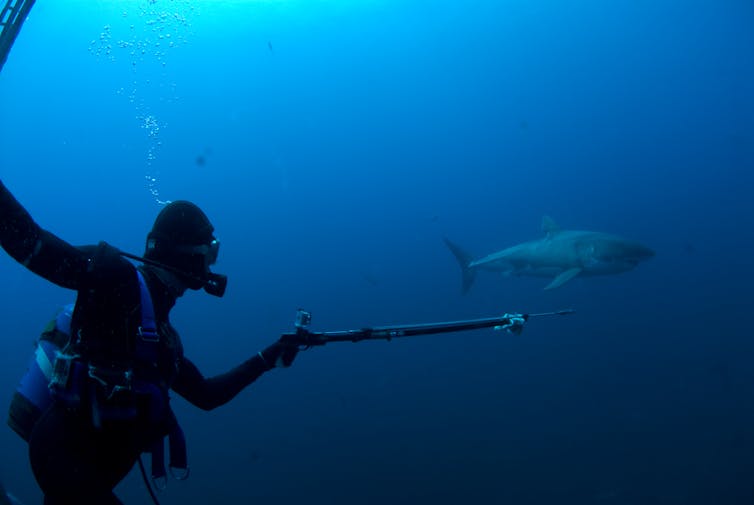
These sharks are iconic apex predators that fascinate people. One of us (John) went cage diving with them recently off the Neptune Islands of South Australia and can attest to how breathtaking it is to watch them in their natural environment.

In terms of economic impact, they are worth far more alive than dead.

White sharks are a growing tourism draw in several countries. Andrew Fox, Adelaide, CC BY

There’s still much we don’t know about white sharks

The complete white shark genome was first published only in 2019. It has 4.63 billion base pairs, making it much larger than the human genome (3.2 billion base pairs).

The genome revealed some surprising things, like how white sharks show strong molecular adaptations for wound-healing processes, and a suite of “genome stability” genes – those used in DNA repair or DNA damage response.

The transcriptome (or sum total of the messenger RNA) of the white shark showed greater similarity to the human transcriptome than to that of other fishes. This hints that “unexpressed genes” in the shark could one day play a role in uncovering genetic pathways for potential cures in human diseases.

Jaws and its sequels certainly brought white sharks to the attention (and nightmares) of humans, with devastating impacts on how we treated them as a species.

Our relationship with white sharks reflects our relationship with nature more broadly – a feared antagonist within the current capitalist paradigm; an enemy to be tamed, contained or consumed.

As we learn more of the peril and potential of these remarkable creatures, we can learn how to live with them, to see beyond our fears and value their role within our delicate ocean ecosystems.The Conversation

John Long, Strategic Professor in Palaeontology, Flinders University and Heather L. Robinson, Research Associate in Cultural Studies. "Beyond the Books: Culture, value, and why libraries matter" will be published late 2024 through Wakefield Press., Flinders University

This article is republished from The Conversation under a Creative Commons license. Read the original article.

June 19 2025

The Sea Shepard Shark Defence Campaign

The mission of our Shark Defence Campaign is to defend, conserve and protect sharks in order to maintain a healthy ocean.


Around the world, sharks are threatened by many human activities including finning, fishing bycatch, commercial fishing, habitat degradation, climate change and government-endorsed control and culling programs.


On Australian shores, our Shark Defence Campaign continues to shed much-needed light on the destructive nature of state-sanctioned shark "control" programs through investigation, documentation and publication. By bringing our message to the Australian public, we are mobilising support for the long-term protection of sharks under Australia’s environment laws. 


Using our small boat the Grey Nurse, our campaign actively monitors and reports on shark nets and drumlines in Queensland and New South Wales, acting as a vocal advocate for their removal.

Read more on the Shark Defence Program on the Sea Shepard site

The ocean can look deceptively calm – until it isn’t. Here’s what ‘hazardous surf’ really means

Over the Easter weekend, seven people drowned along the Australian coast. Most were swept off rock platforms – extremely dangerous locations that are increasingly prevalent in Australia’s coastal fatality data.

The weather was unseasonably warm, the surf at times looking calm and at others foreboding. And yet, despite warnings from Surf Life Saving, emergency services and meteorologists, many still entered the water – often unaware of how deceptively dangerous the conditions could be.

It was a tragic reminder that many people don’t understand ocean conditions and how waves and swells work. Current water safety warnings aren’t doing enough to change behaviour – but with simple improvements and better education around long-period swells, we could save lives.

The difference between waves and swells

Waves on the ocean are caused by wind. Some, called sea waves, are generated by nearby winds. Others, known as swell waves, are created by >distant weather systems, such as storms far away, and travel long distances.

Swells can travel thousands of kilometres and may still be present even if the local wind is calm. It’s estimated that up to 75% of wave action across the globe is caused by distant storms, not local winds. This makes the predicting of swells and waves a complex science.

A long-period swell refers to waves that arrive at longer intervals, typically 12 to 20 seconds apart. These swells carry more energy than short-period ones, travel greater distances, and tend to produce sets of larger waves when they hit the coast.

A large wave smashes into an ocean bath through the fencing.
Long-period swells can result in sudden large waves that crash into the beach with more energy. Sneaky Buddy/Shutterstock

What makes long-period swells so dangerous?

Over Easter, hazardous long-period swells generated by an ex-cyclone offshore were hitting much of the east coast. The Bureau of Meteorology issued warnings, and Surf Life Saving reinforced these messages with media alerts and beach closures.

But the surf didn’t always look threatening – at least not all of the time.

The misleading nature of long-period swells is part of the problem. They create deceptively calm periods, and lulls between these wave sets can last ten or 15 minutes. During that time, people feel safe entering the water, wading out, going onto a rock platform or relaxing near the shoreline.

When the next set arrives, it can be unexpected and forceful – knocking people over, pulling them into the water or creating unexpected currents.

Unlike short-period waves, long-period swells carry momentum that enables them to surge much further up beaches and rock platforms, increasing the chances of sweeping people into the water. When these waves break, they do so with considerable force, and the powerful backwash can drag people into deep water.

The sudden arrival of these waves, without a gradual buildup, makes them especially dangerous in exposed areas like rock shelves or platforms.

Rock platforms are dangerous because of a combination of environmental exposure and low visibility in our approach to coastal safety. They’re often exposed to powerful waves, have uneven, slippery surfaces, and lack easy exit points.

If someone is knocked into the water, there’s usually nothing to hold onto, and climbing back up is almost impossible – especially in heavy clothing or fishing gear.

Why current warnings don’t cut through

Australians may be familiar with fire danger ratings, cyclone warnings and the UV index.

But the way we communicate surf risk – particularly around swell behaviour – is vague and technical. Phrases like “hazardous surf” or “long-period swell” are accurate, but fail to convey what people will actually experience at the shoreline.

Most members of the public don’t know what a 16-second swell interval means, or how it affects where and how waves break. As a result, warnings go unnoticed, or people believe they can assess the risk themselves by looking at the water – which, during a lull, can seem completely harmless.

Social media compounds this problem. Over Easter, videos of huge waves circulated widely, but so did footage of people playing or standing near the water with no apparent concern. The public sees mixed signals – and the science and warnings don’t always cut through.

How to improve coastal hazard communication

If we want to reduce coastal deaths during swell events, we need to bridge the gap between forecasts and real-world understanding.

1. Translate forecasts into direct, behavioural warnings

Instead of just saying “hazardous surf”, add language that explains what that means: “Conditions may appear calm, but large sets of waves will arrive every 10–15 minutes. Stay well back from the waterline”.

2. Use visual risk systems

Just like fire danger ratings, a colour-coded coastal risk index could be introduced for days when swell conditions are particularly hazardous. Simple signage at beaches could indicate the risk level and explain the reason for it.

3. Integrate live updates at key sites

SMS alerts or digital signage at car parks and entry points could provide real-time hazard updates. These should be visual and multilingual to reach a broader audience.

4. Make ocean science public knowledge

Government campaigns, surf clubs and schools should all help explain the basics of swell behaviour – including what long-period swell is, why wave sets arrive and why calm periods aren’t always safe. Just like swim between the flags became a known rule, so, too, should basic awareness of wave cycles. Surfers could be champions of this education.

The conditions that contributed to the Easter drownings were forecast, monitored and forewarned. But most people don’t make decisions based on marine forecasts – they make them based on what they see in front of them.

Long-period swell is a classic hidden hazard. It tricks even experienced beach goers, not because the science is unclear, but because the risk isn’t made clear to the public. The Conversation

Samuel Cornell, PhD Candidate, Beach Safety Research Group, School of Population Health, UNSW Sydney

This article is republished from The Conversation under a Creative Commons license. Read the original article.

April 24 2025

Marine Worm Offers Clues About Our Evolutionary Past

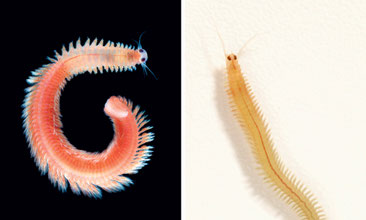
Platynereis dumerilii are marine worms found across the European coasts. The males (left), have a frontal part with white sperm and a red rear due to blood vessels while the females (right) are initially transparent and acquire a yellow colour.

EMBL researchers study Platynereis dumerilii, a worm that retains many features of ancient species, aiming to discover mechanisms of evolution

After more than 500 million years of existence as a species, the worm Platynereis dumerilii still retains some ancient features that most other animals have moved on from over evolutionary time. Yet, this species has been able to survive and adapt to a variety of environments.

Scientists in Detlev Arendt's group at EMBL Heidelberg have tracked this marine worm over time and space, in a quest to learn the many lessons it offers about evolution. They recently took advantage of EMBL's Traversing European Coastlines (TREC) project to broaden their research perspective, resulting in both interesting science and some incredible stories. cientists in Detlev Arendt's group at EMBL Heidelberg have tracked this marine worm over time and space, in a quest to learn the many lessons it offers about evolution. They recently took advantage of EMBL's Traversing European Coastlines (TREC) project to broaden their research perspective, resulting in both interesting science and some incredible stories.

"We don't know which parts are new and which are old in us humans," said Phil Oel, Field Expedition scientist in the Arendt Group. "Since we can't time travel, Platynereis offers a good path backwards to compare and contrast. We can identify traits still there and infer basic traits - what the original ancestors looked like, so to speak."

In other words, the scientists hope to uncover the species's missing biological history. For example, many brain parts and functions in these worms have retained relatively ancient forms, in contrast to other animals that have more drastically updated their brains to suit complex needs. This is what makes Platynereis dumerilii special.

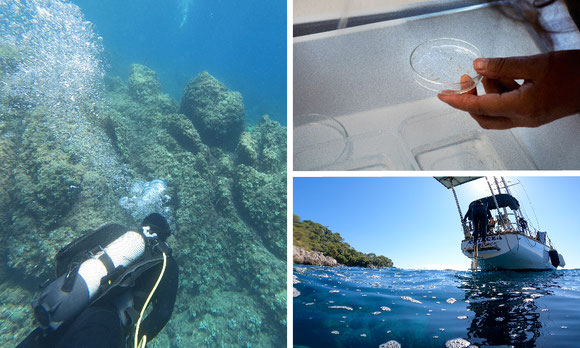
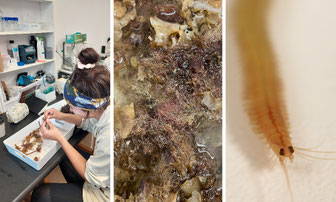
Arendt Group's researchers joined the TREC expedition and collected Platynereis worms across European coasts. During the journey, Oel, Gerber, and Witte learnt how to adapt laboratory protocols to field sampling. Credit: Philip Oel and Patric Mueller/EMBL When the EMBL-led TREC expedition started its field sampling phase in early 2023, it offered the researchers an opportunity to gather Platynereis from a variety of places along Europe's coasts. By collecting and comparing Platynereis from different locations, the scientists could investigate how the worm populations evolved in different habitats and conditions.

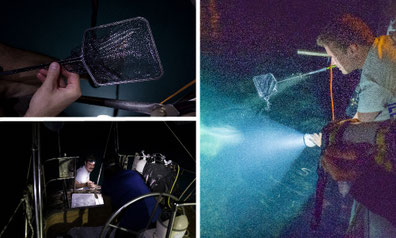
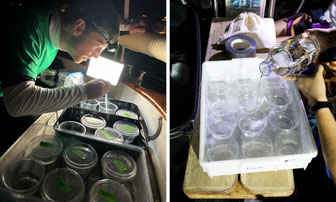
The main challenge, however, came from the worm's unique mating ritual: a beautiful dance following the lunar cycle. On specific nights, female and male worms sense the presence of each other and begin swimming in circles, during which the eggs and sperm are released into the water and eggs get fertilised. Capturing these events can be quite tricky, resulting in several unsuccessful sampling missions.

Arendt Group's researchers joined the TREC expedition and collected Platynereis worms across European coasts. During the journey, Oel, Gerber, and Witte learnt how to adapt laboratory protocols to field sampling. Credit: Philip Oel and Patric Mueller/EMBL

Finally, after several night shifts, the researchers were able to catch Platynereis worms right before mating. Afterwards, the worms were placed in a little ocean on the boat - a simple glass of water - in which the worms could mate. At this point, the clock stops for the worms since their lifespan comes to an end after releasing the sperm and eggs. In contrast, the clock starts running for scientists who are interested in studying the progeny at different ages.

"TREC allowed us to study the microevolution of Platynereis and understand how the conditions close to the North and Baltic sea challenged the population compared to the Mediterranean sea, for example," Gerber said.

Broadening the research scope

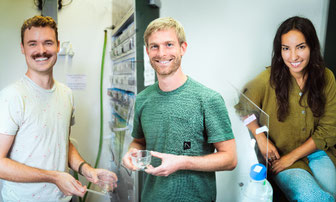
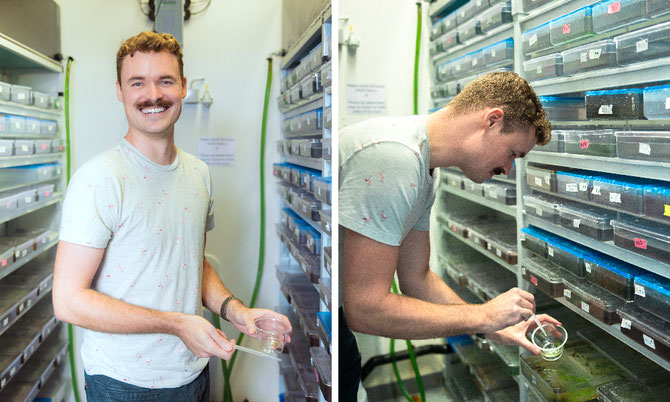
Phil Oel, Tobias Gerber, and Victoria Witte, members of the Arendt group at EMBL Heidelberg are studying how Platynereis dumerilii adapts to different environments, investigating possible mechanisms of evolution. Credit: Kinga Lubowiecka/EMBL

When the EMBL-led TREC expedition started its field sampling phase in early 2023, it offered the researchers an opportunity to gather Platynereis from a variety of places along Europe's coasts. By collecting and comparing Platynereis from different locations, the scientists could investigate how the worm populations evolved in different habitats and conditions.

The main challenge, however, came from the worm's unique mating ritual: a beautiful dance following the lunar cycle. On specific nights, female and male worms sense the presence of each other and begin swimming in circles, during which the eggs and sperm are released into the water and eggs get fertilised. Capturing these events can be quite tricky, resulting in several unsuccessful sampling missions.

Using tiny worms to study nervous system evolution

Oel and colleagues collected Platynereis during the night, since this is when these worms come to the water surface to mate. After several unsuccessful night shifts, the researchers were finally able to catch them! Credit: Patric Mueller/EMBL

The size of this species also determines the type of analyses that scientists can do. Gerber's postdoctoral work has him comparing genes expressed in individual cells from across the whole organism, a technique called single-cell RNA sequencing. "I study the worms at exactly six days of age since they are already tiny worms by then, equipped with the main organs and body parts that will be maintained until their adult age," he said. At six days of age, the worms are only a few micrometres long (one micrometre being about one-hundredth the thickness of human hair). This allows Gerber to profile all cell types across the whole worm body simultaneously. Witte, on the other hand, is interested in how the Platynereis nervous system evolves. Her PhD project looks at cell types present in the worm's brain to get a better fundamental understanding of them and also to potentially compare them to species that are evolutionarily related.

"During my first week at EMBL, I travelled to Villefranche-sur-Mer, close to Nice in France, to join TREC scientists and start collecting Platynereis that were already around one year of age," Witte said. "At this time, the worms have specific behaviours and a capacity to learn, so we wanted to know how their brains adapted to different environments encountered at the Mediterranean versus the North sea."

Both Gerber's and Witte's research projects will help build the first atlas at cellular resolution for a whole Platynereis animal, especially for the nervous system, including early development and differentiation stages. This work will allow, in the future, not only to select a cell anywhere in the worm body and know what genes that cell expresses but also the other way around: discover which cell expresses a specific group of genes. These discoveries, when merged with evolutionary biology studies, will make it possible to determine, for example, which cells are evolutionarily old or new in the worms' brains.

efore TREC, the scientists mostly did lab-controlled temporal evolutionary studies where they grew worms in the lab and studied different stages over time. "TREC made spatial evolution studies possible," Oel said. "After collecting samples in different locations, we can now merge both datasets and characterise Platynereis across time and space."

Oel's own research looks at photoreceptors. "They are little cells that can detect light and then send this information to the brain," he explained. "Platynereis need these cells. For example, they help indicate when the worms are too close to the sea surface, where they might be eaten by larger animals, and should therefore swim into deeper waters."

During evolution, cells can change from one type to another. By analysing how photoreceptors in Platynereis have evolved across time and space, Oel is trying to understand how organisms make new kinds of cells. REC's sampling phase ended this summer, and now the three scientists are ready to use the collected samples to construct a complete story of Platynereis dumerilli evolution.

"With the work of Victoria, Phil, and Tobias, we have now built new fantastic resources that enable us to explore the nervous system of Platynereis at the cellular level," said Detlev Arendt, EMBL Group Leader. "From this, we expect many more exciting insights into the evolution of the nervous system. This will be regarding both the origin of nervous systems and also their capacity to adapt to changing conditions, such as the challenges resulting from climate change."

First published by EMBL:

https://www.embl.org/news/science-technology/a-marine-worm-offers-clues-about-our-evolutionary-past/?utm_source=miragenews&utm_medium=miragenews&utm_campaign=news

Jan 10 2025

Philip Oel's research is focused on specific cell types present on Platynereis - the photoreceptors. By understanding their functions in this worm, the scientist can infer how new cell types form in organisms. Credit: Kinga Lubowiecka/EMBL

Marine Science News

Sea foam reveals a lot about the health of a beach’s ecosystem. Here’s how to spot polluted surf

When a beach walk feels like grief: disasters like SA’s algal bloom cut us off from nature when we need it most

As oceans warm, tropical fish are moving south. New friendships may be helping them survive

Jaws at 50: how a single movie changed our perception of white sharks forever

Marine Science facts

The vampire squid gets its name not because it has a taste for blood but from the dark skin on its arms that makes it look like it’s wearing a Dracula-esque cape?


The oceans provide 99% of the living space on the planet containing 50-80% of all life.


The Oceans cover 70% of the earths suface


The deepest part of the ocean is called the Mariana Trench, which is around 7 miles deep and is located in the South Pacific Ocean.


The water pressure at the bottom of the Mariana Trench is eight tons per square inch. This means the pressure there is enough to crush you.


The largest mountain range is found underwater and is called the Mid-Oceanic Ridge that is around 65,000 kilometres long.


Sponges are older than dinosaurs.


Half the Oxygen we breath is produced in the Ocean.


 Irukandji jelly fish, with just a brush of venom leaves almost no mark. But after about a half hour you develop Irukandji syndrome, a debilitating mix of nausea, vomiting, severe pain, difficulty breathing, drenching sweating and sense of impending doom. You get so sick that your biggest worry is that you’re not going to die.


The most remote point in the oceans is called Point Nemo.


The Pacific, Atlantic, and Indian oceans are known as the three major oceans.